

Belushi's, Greenwich - When Is A Pub Not A Pub?
In the case of Belushi's, when it is determined to be a 'drinking establishment with expanded food provision' rather than a 'public house'.
Belushi's (formerly the Prince of Orange), next to Greenwich station, closed in May 2026 and shortly before this twin planning applications were submitted seeking a change of use to either a cafe or convenience store.
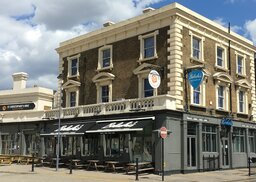
Greenwich Council refused both applications on the grounds of loss of a pub without it being sufficiently demonstrated that a pub is not viable in that location and it not having first been marketed for at least 2 years, as required under the local plan.
The applicant appealed the decisions and in early Oct 2026 a planning inspector ruled in favour of both applications.
A key component of the inspector's decision is their determination that the premises previously operated as a bar which also offered food over and above basic bar snacks. In their view, therefore, in planning terms the use was as a 'drinking establishment with expanded food provision' rather than a 'public house' as the latter is deemed to be majority wet-let. Therefore any pub protection provisions within national and local planning polices did not apply.
Under the updated planning Use Classes Order, section 3(6) lists various standalone 'sui generis' uses which fall outside of the main planning use categories, including the two referred to above - clauses (p) and (q) respectively.
Unhelpfully, neither the national planning policy framework ('NPPF') nor the London Plan and the Greenwich Local Plan include a definition of what constitutes a 'drinking establishment' and a 'public house', leaving it open to interpretation by local planners and planning inspectors.
Also, under permitted development rights, a premises may change its use between these two categories, (p) and (q), without requiring planning permission.
The precedent set by this planning appeal decision is clearly concerning for those of us campaigning to save pubs, as it opens the door to those pubs offering a broad food offering being deemed to fall outside of national and local pub protection policies.
CAMRA has been pressing government for some time to enact a legal definition of a public house and the outcome in this case provides additional strong evidence in support of this.
CAMRA's Planning Advisory Group have reviewed the inspector's ruling and are seeking to meet with government officials to discuss this and other planning matters impacting pubs. Given that changes to the law often take considerable time to progress, more immediate action could include asking government to issue planning guidance that pubs are to be regarded as 'drinking establishments' too. Local authorities could also be encouraged to adopt CAMRA's pub definition within their local plans.